A Historic, Hopeful Day for Progressive Politics
With public trust in political institutions at historic lows and the populist right capitalising on economic and social insecurity, progressives are confronted with a pressing challenge: how can we construct the coalitions, narratives, and policy frameworks needed to overcome this threat?
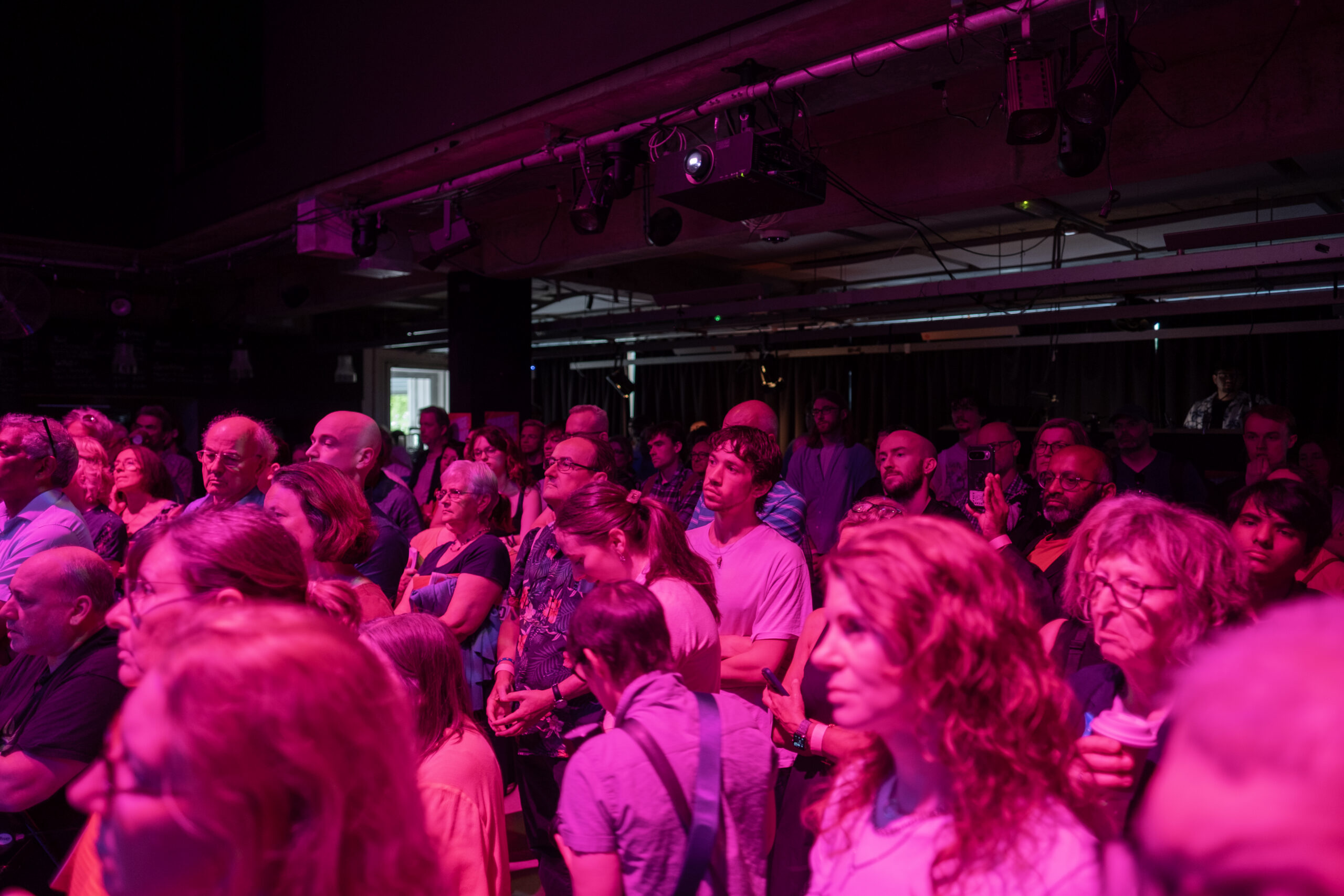
On 30th May, over 800 people gathered at Rich Mix for Change:NOW! Mobilising the Progressive Majority to grapple with precisely this question.
The day was marked by productive debate, ambitious ideas, and a shared determination to develop a credible alternative to status quo politics. It served as a vital space for progressives from across all parties (and none) to advocate for new political strategies and a change in economic direction.
We Began with A Call to Action
The conference opened with the “The Moment for Change” plenary session, featuring a lineup of speakers who discussed the future of the left and set the tone for the conference.
Caroline Lucas, former leader of the Green Party, started the day off by delivering a rallying call for the progressive majority to mobilise across party lines. She emphasised the urgency of democratic reform in making this a reality:
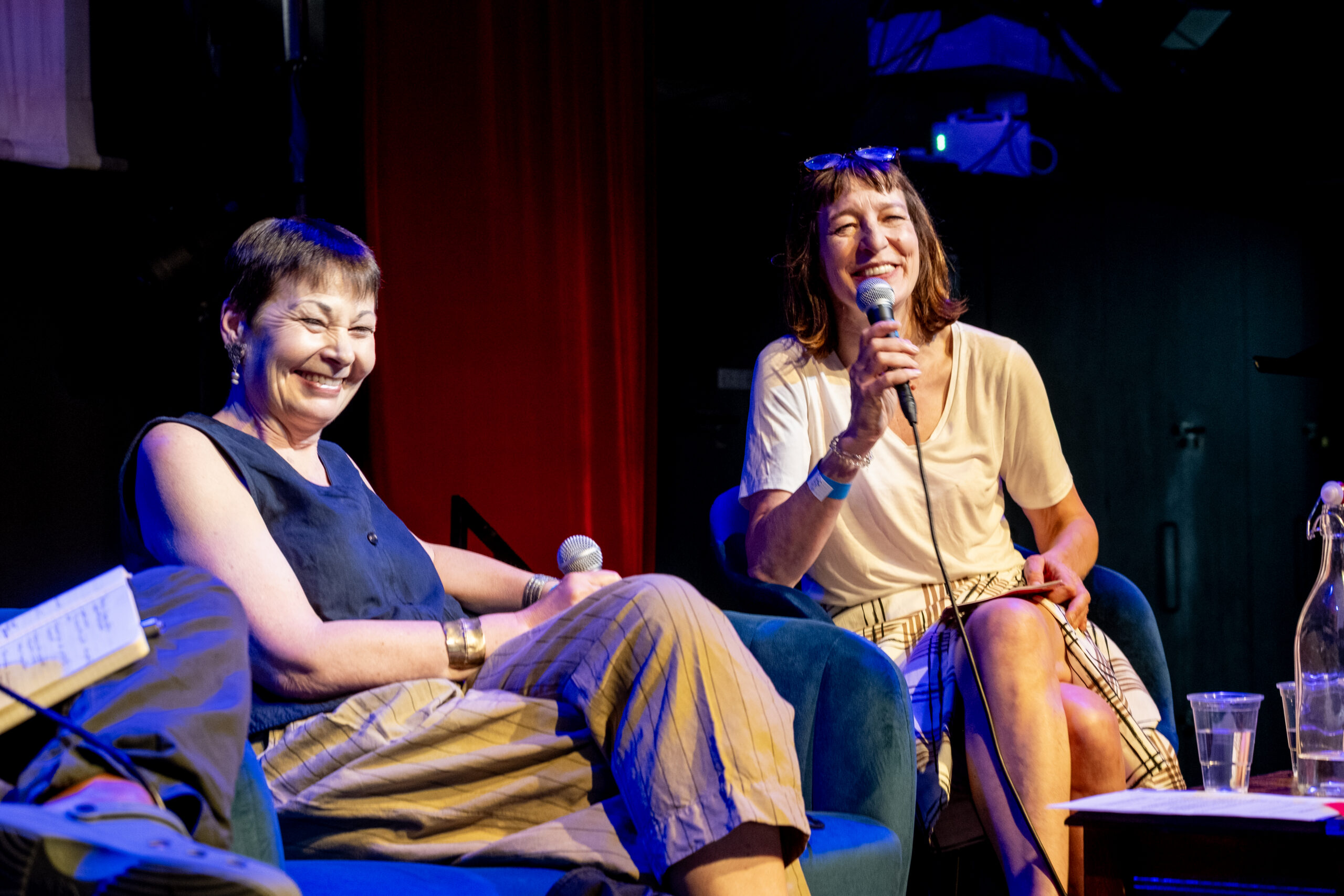
“A fairer voting system is essential, both because it offers us the best opportunity at transforming our political system and keeping Farage out of Number 10, and because political pluralism delivers better politics”
Patrick Allen, Founder and Chair of the Progressive Economy Forum, outlined how austerity and rising economic insecurity have created fertile ground for right-wing populism. But he remained hopeful about the prospect of change, arguing that implementing fairer economic policy could meaningfully reshape society:
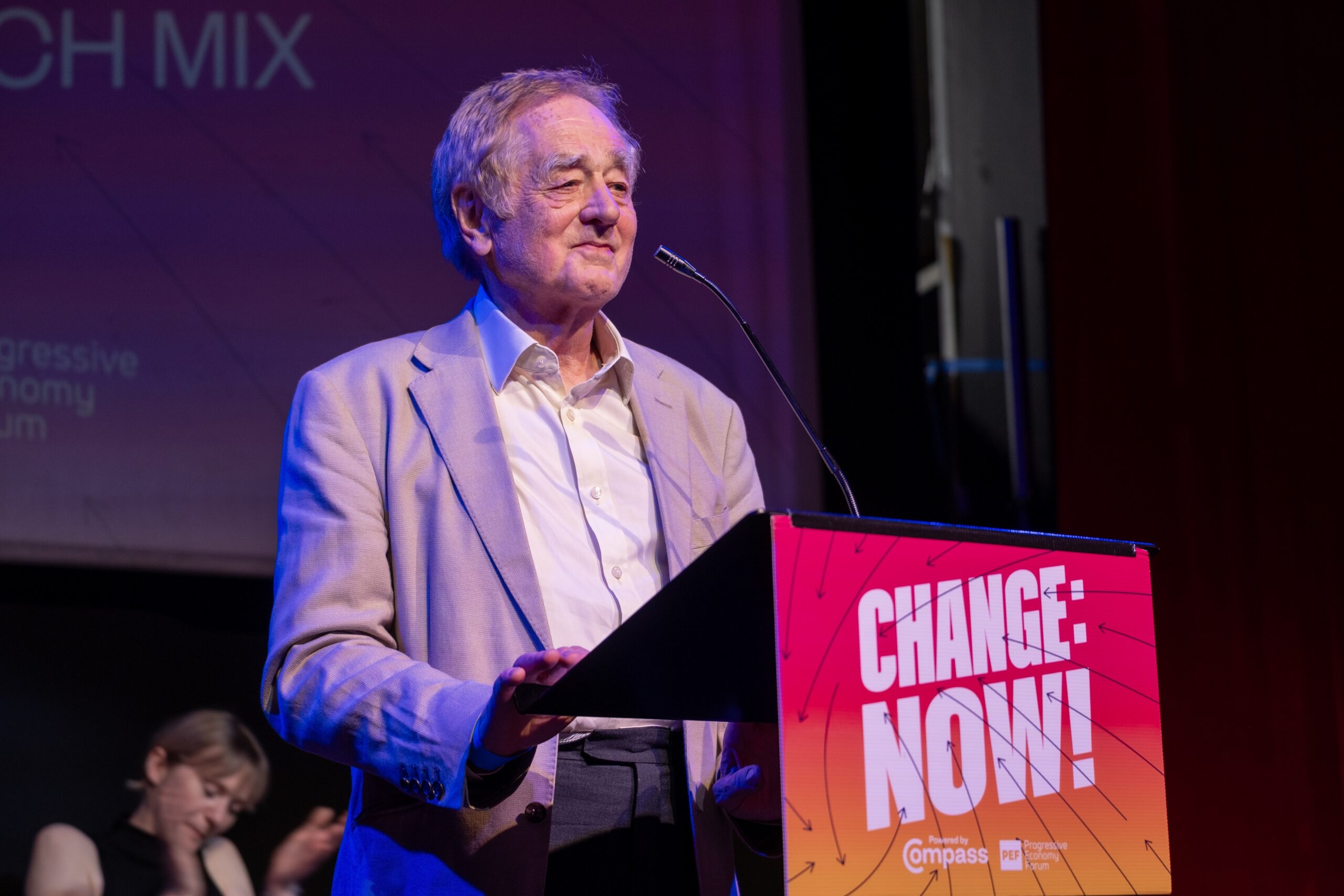
“If you get the budgets, the taxation, and the public spending right, and you can build a society which is more secure, prosperous, resilient, and sustainable”
Economist and YouTuber Gary Stevenson challenged the assumption that the level of inequality endemic to our current economic system is inevitable.
Drawing on historical examples like the introduction of progressive income tax, he argued that ambitious economic reform that addresses the unequal distribution of wealth is not just possible, but entirely precedented.
Reflecting on the introduction of progressive income tax, which radically decreased poverty for his grandmother’s generation, he said:
“We did that over the course of [one] lifetime with no historical precedent… so don’t tell me it’s impossible”
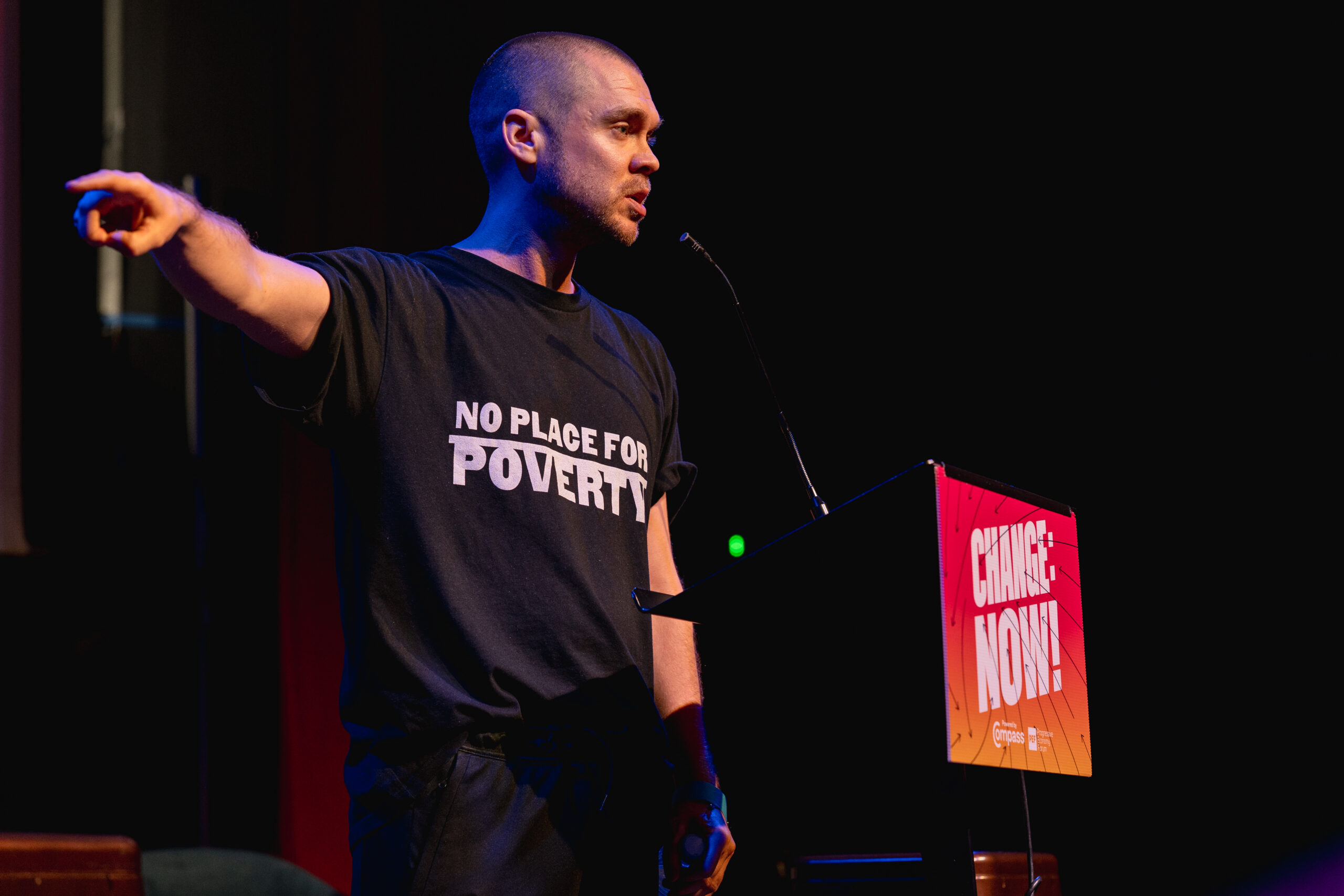
However, to garner the collective buy-in necessary to make these changes, Stevenson stressed the importance of coherence and ideological clarity within progressive politics. He made a compelling argument that, to rally the public, the left should put wealth redistribution at the centre of its agenda:
“We need a clear unified message; if it is not inequality, and if it is not wealth taxes, what the hell is it?”
Lena Swedlow, Deputy Director of Compass, urged attendees to reject political fatalism and focus instead on letting political imagination and optimism reinvigorate collective action: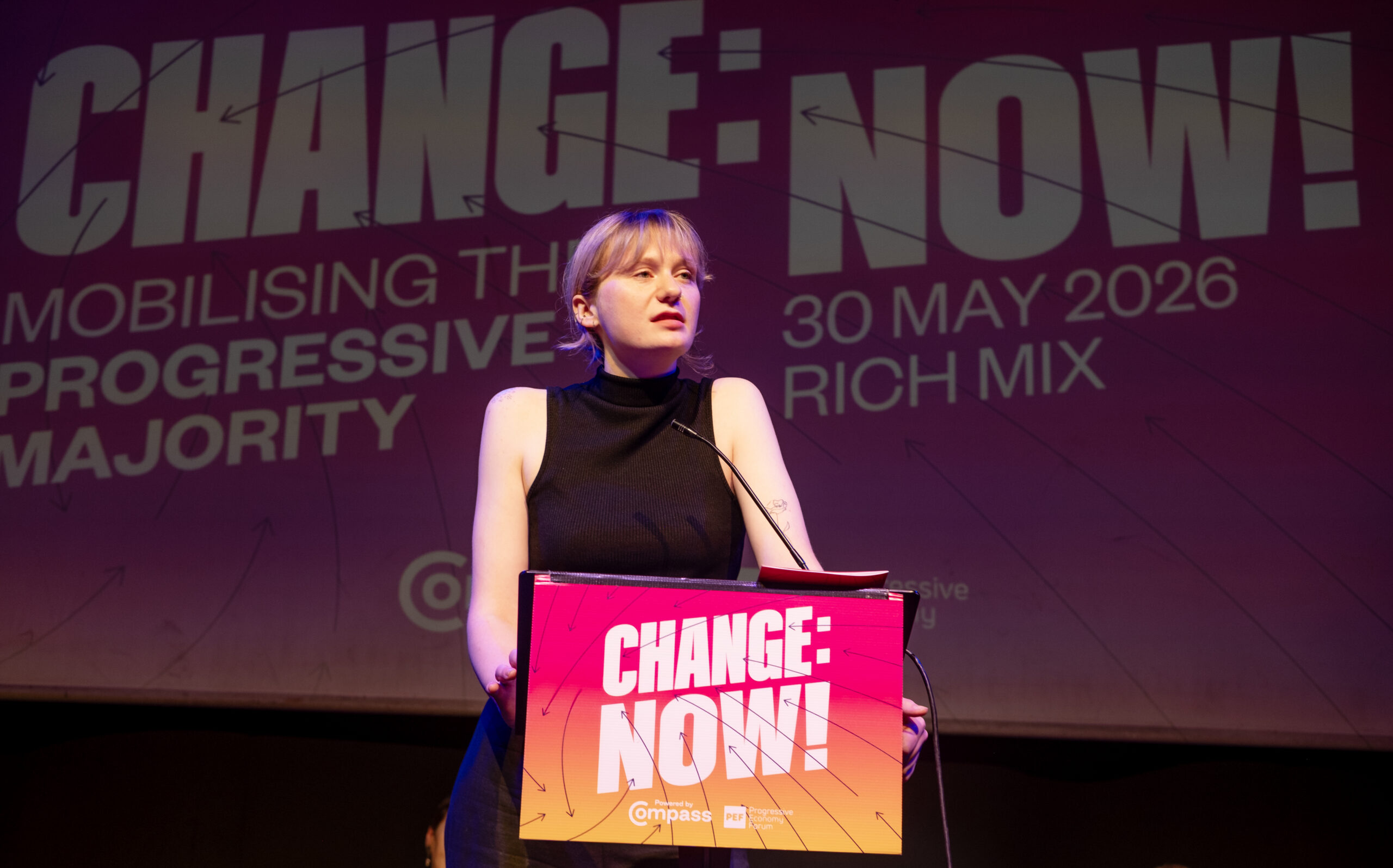
“We can win change; we can build relationships across difference, and we can create a politics that is bigger, kinder, more democratic, and more effective than the one we’ve inherited”
Breakout sessions
The breakout sessions at Change:NOW! explored the ideas, strategies and policies needed to build a progressive future in a time of political fragmentation and economic uncertainty. Many discussions focused on pluralism as a practical discipline for working across divides, as well as the role of extraparliamentary institutions — including trade unions, co-operatives and civic organisations — in supporting progressive governments and strengthening democratic participation.
In a panel on confronting economic insecurity in a time of economic upheaval, Kate Pickett, Professor of Epidemiology at University of York and author reminded the audience that the building blocks of a fairer, more sustainable society have already been developed and tested:
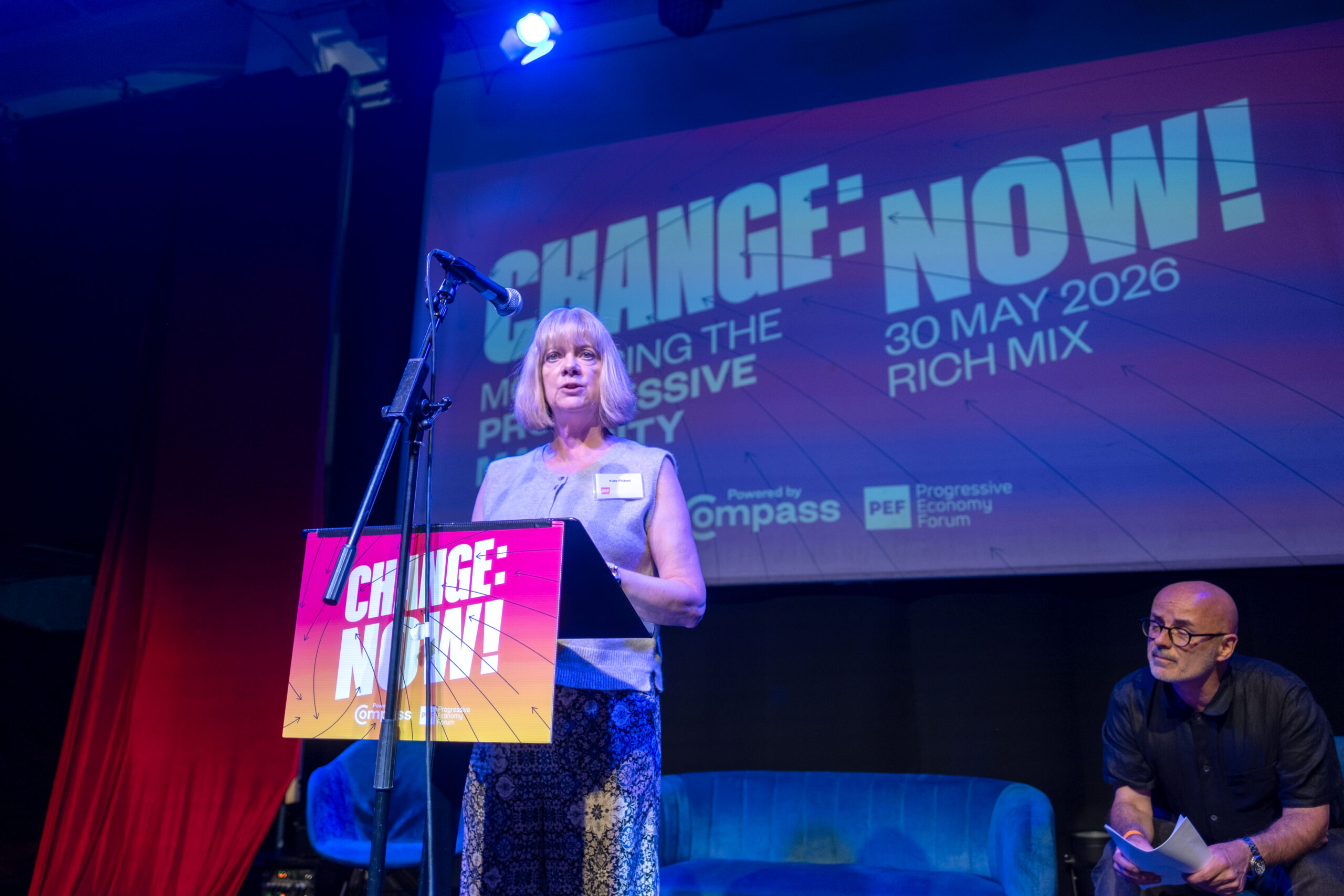
“Sceptics and the far-right keep telling us that designing a fair, compassionate, and sustainable society is an impossible utopia, but the truth is, we are fighting for what already exists… across the world, we can find proof of concept of all of the solutions and policies we need”
Other sessions explored the choices and trade-offs involved in delivering progressive policies across areas including social care, pensions and immigration, while asking how political storytelling can address people’s anxieties without legitimising division, racism or fear. Speakers debated what progressivism means in the 21st century, how the UK can rebuild its economic relationship with Europe, and how a different approach to global cooperation on development, climate finance, energy security and institutional renewal could deliver progressive goals at home and abroad.
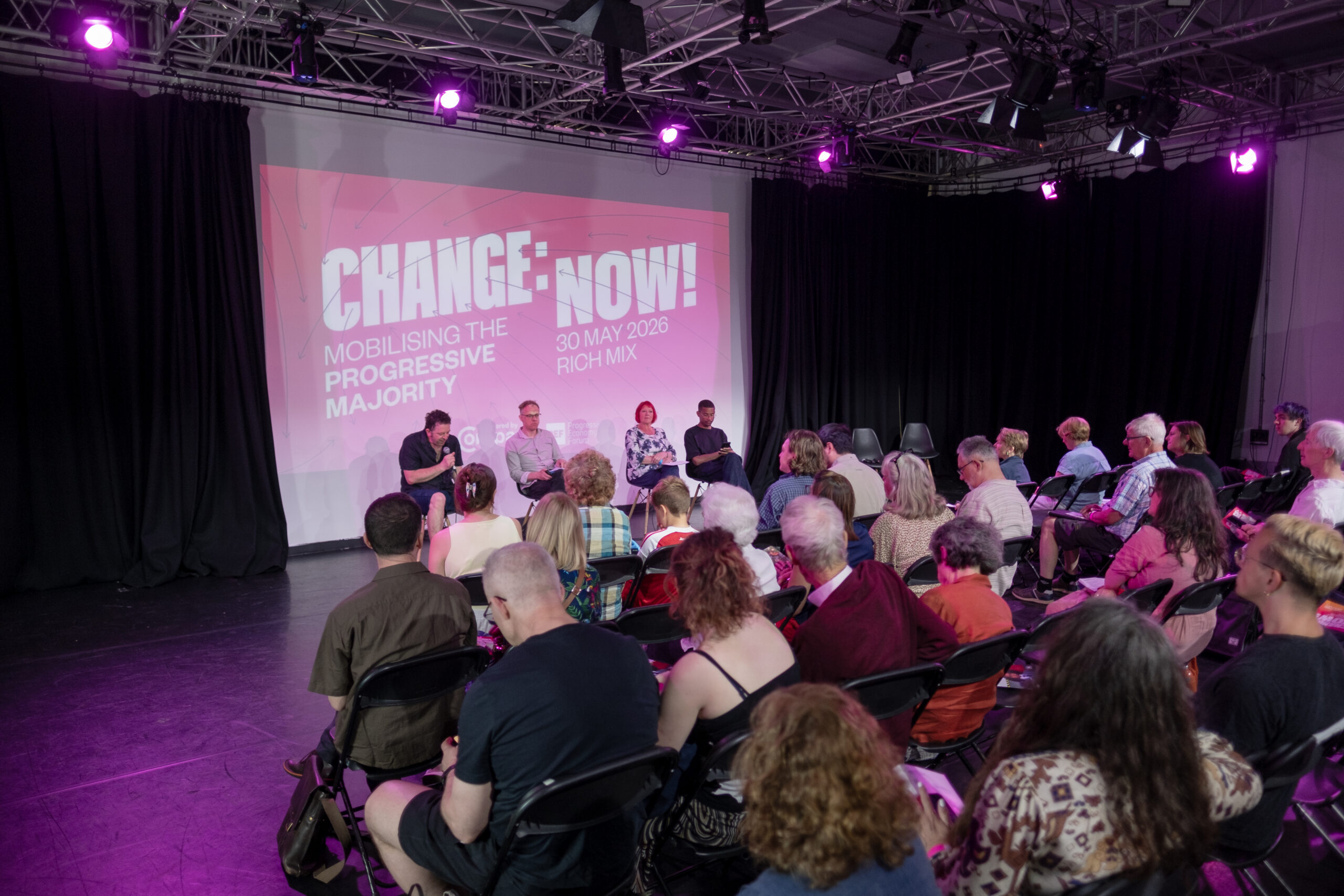
Sessions also examined how trust in democracy can be strengthened through electoral reform, residence-based voting rights, limits on political donations, media reform and more participatory approaches to public services. Conversations focused on practical solutions to these divisive issues; for example, the National Education Union discussed how universal policies like Free School Meals for All can be used to counter populism and division.
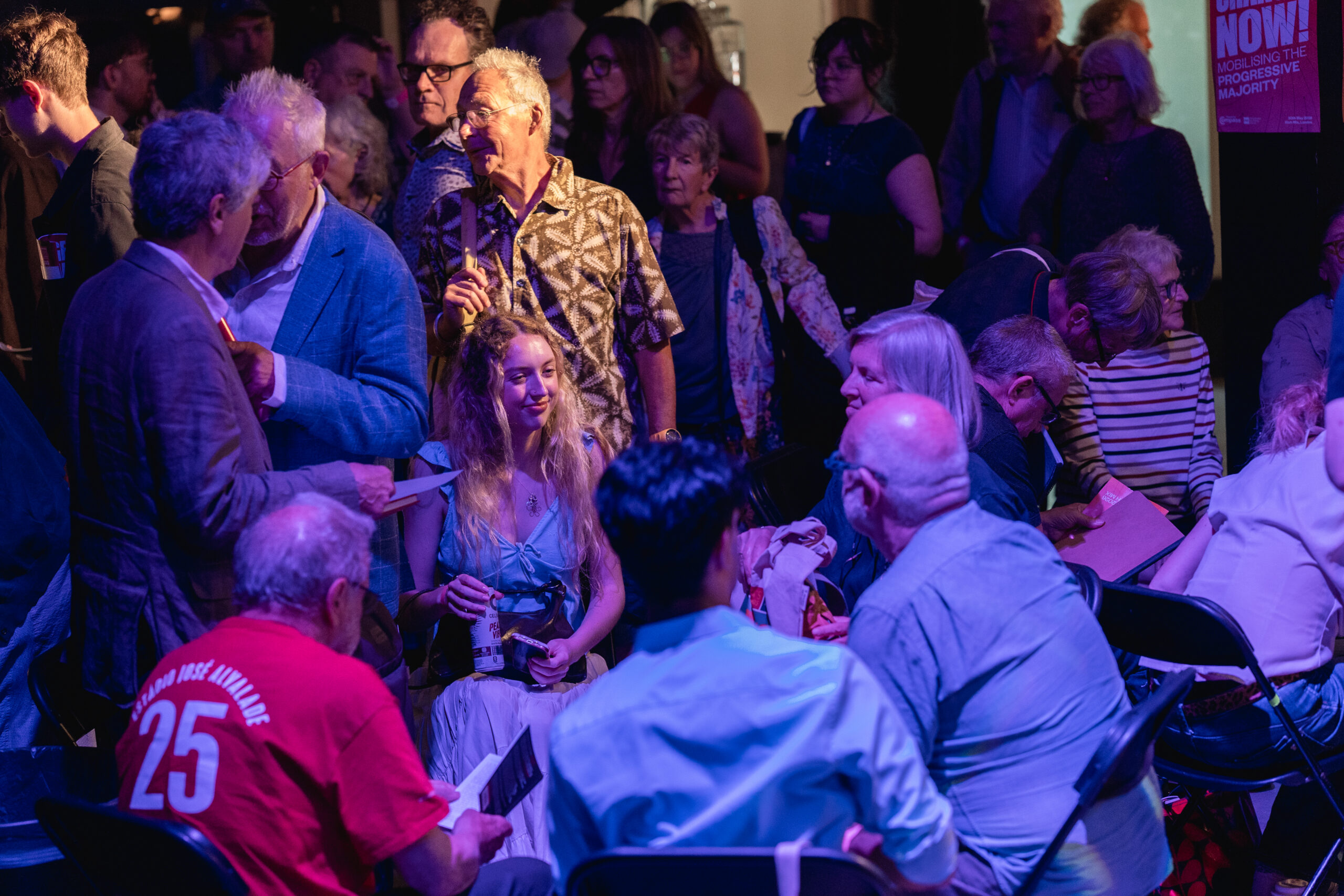
The Power of the Majority: Participatory Sessions
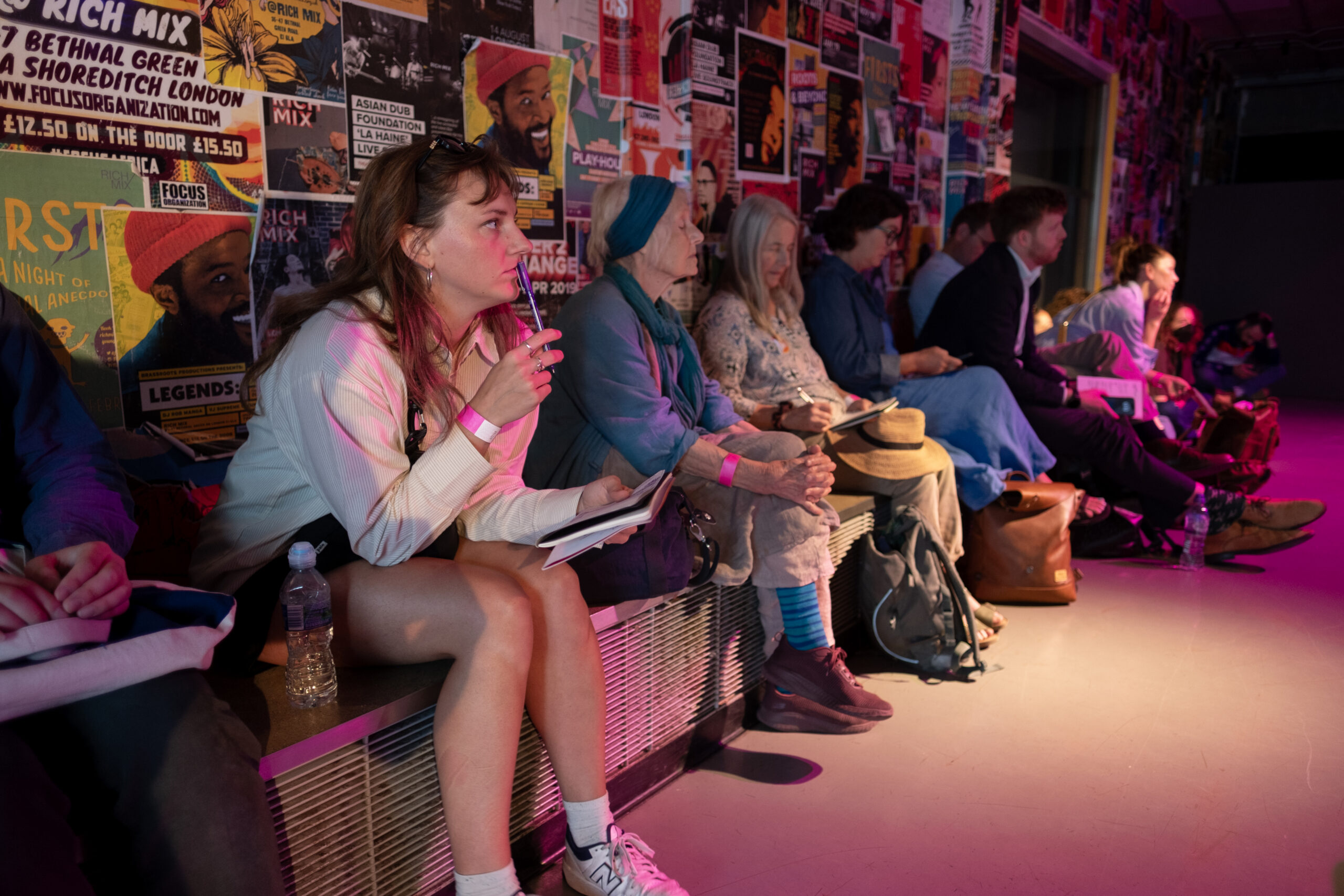
We also hosted sessions called “Conversations for Change”. These discussions allowed attendees to pitch creative strategies for engaging the progressive majority. These discussions aimed to develop a shared narrative that the progressive movement can use to explain our objectives and mobilise people behind them. Participants also proposed policy ideas that they believed should sit at the heart of a progressive agenda.
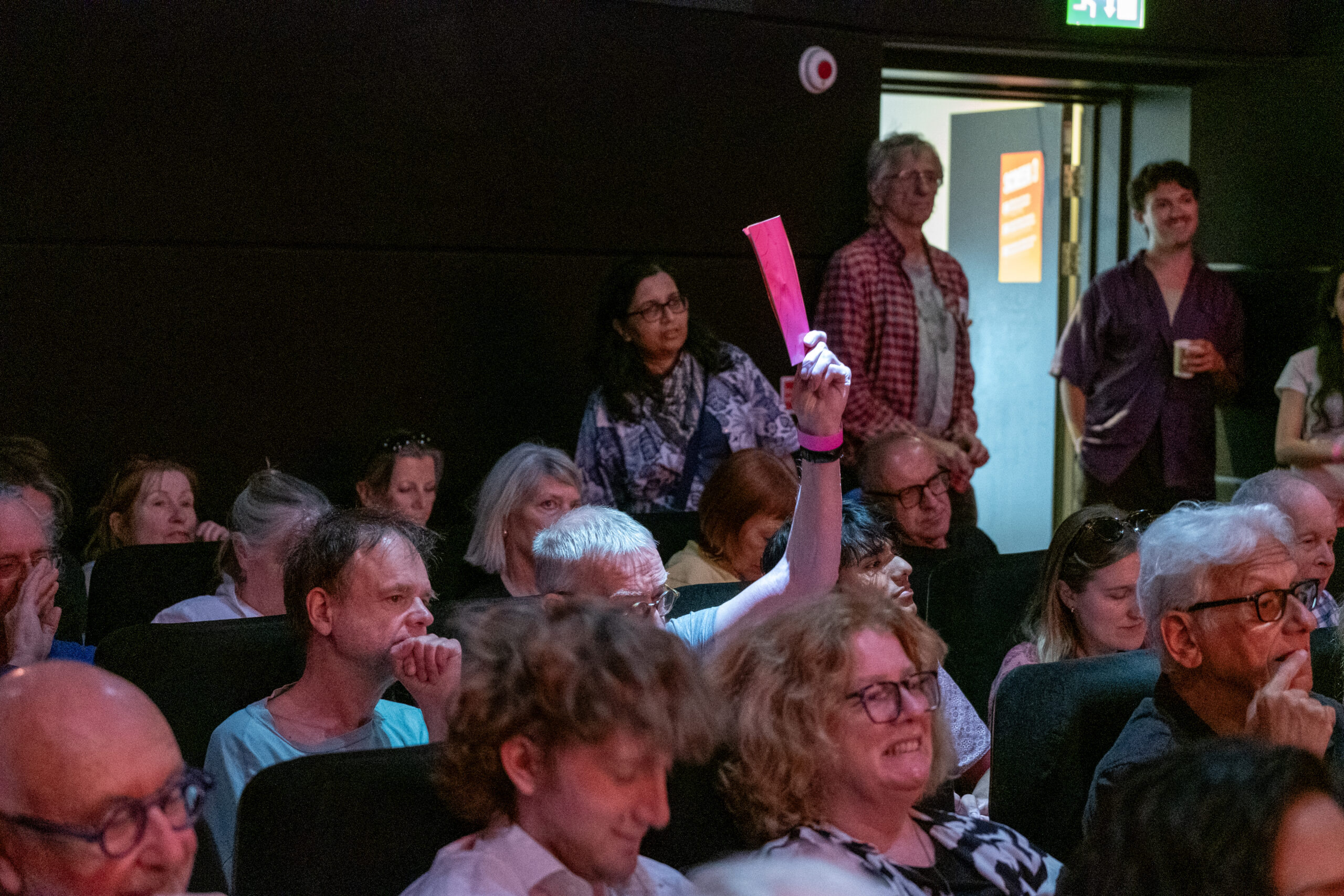
Throughout the sessions, attendees engaged in debate using a colour-coded card system, raising white to deepen a point or pink to challenge a speaker. The result was a lively yet respectful and productive exchange of ideas.
Concluding remarks: From Vision to Victory
The conference concluded with a final plenary titled “From Vision to Victory: Where Next for the Progressive Majority?”.
Neal Lawson, Director of Compass, set out the rationale for Compass’s opening up its membership beyond the Labour Party:
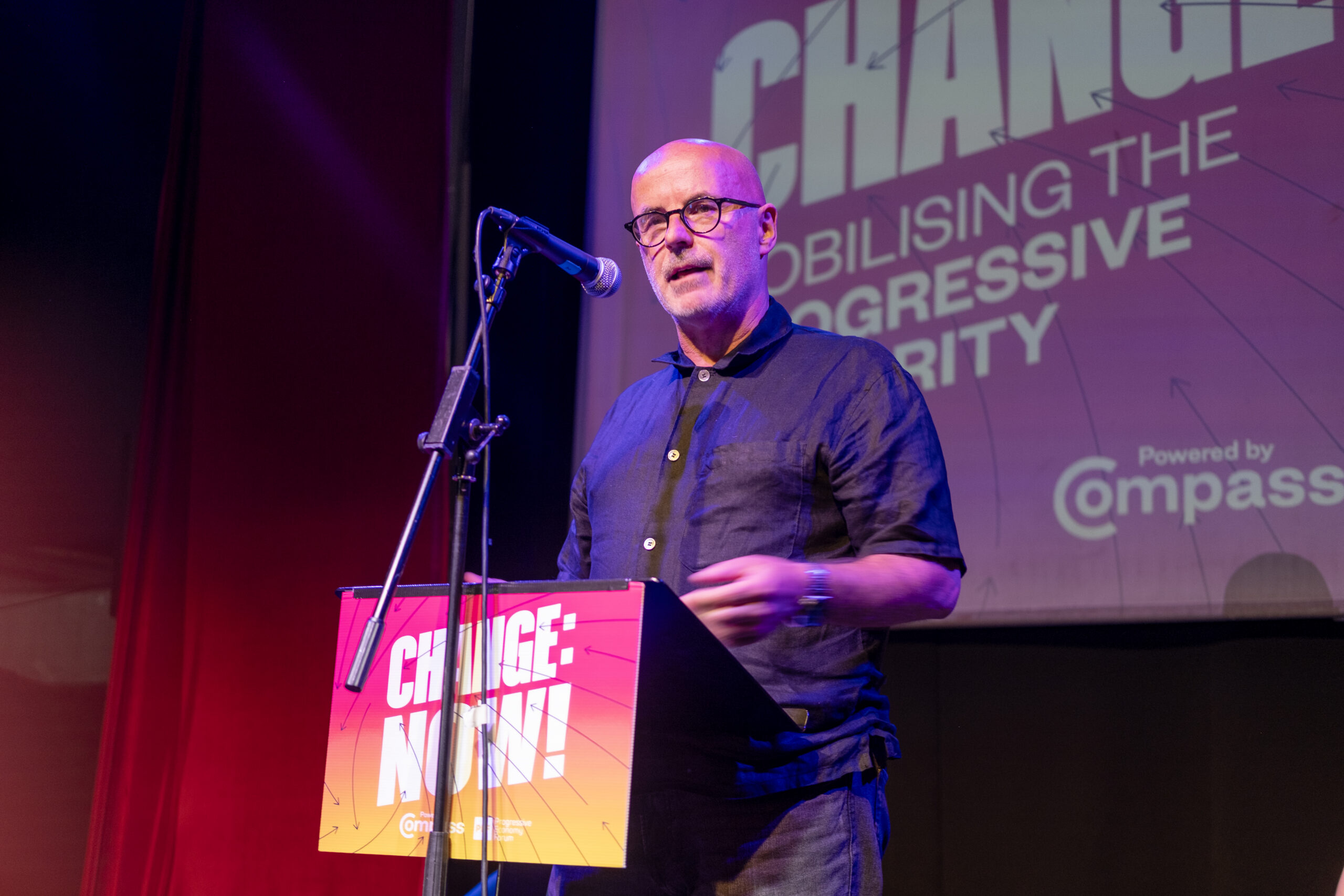
“We knew that the challenges coming down the track on climate, economy, ageing, technology, were too big for any one party… No single party was capable of meeting these complex challenges, or could hold a consensus together internally to do so”
He urged the audience to see beyond party lines to offer a viable, pluralist alternative to Reform, and ultimately transform the economy and society.
Zack Polanski, Leader of the Green Party, reminded attendees of the need to situate the climate crisis within its broader socio-economic context:
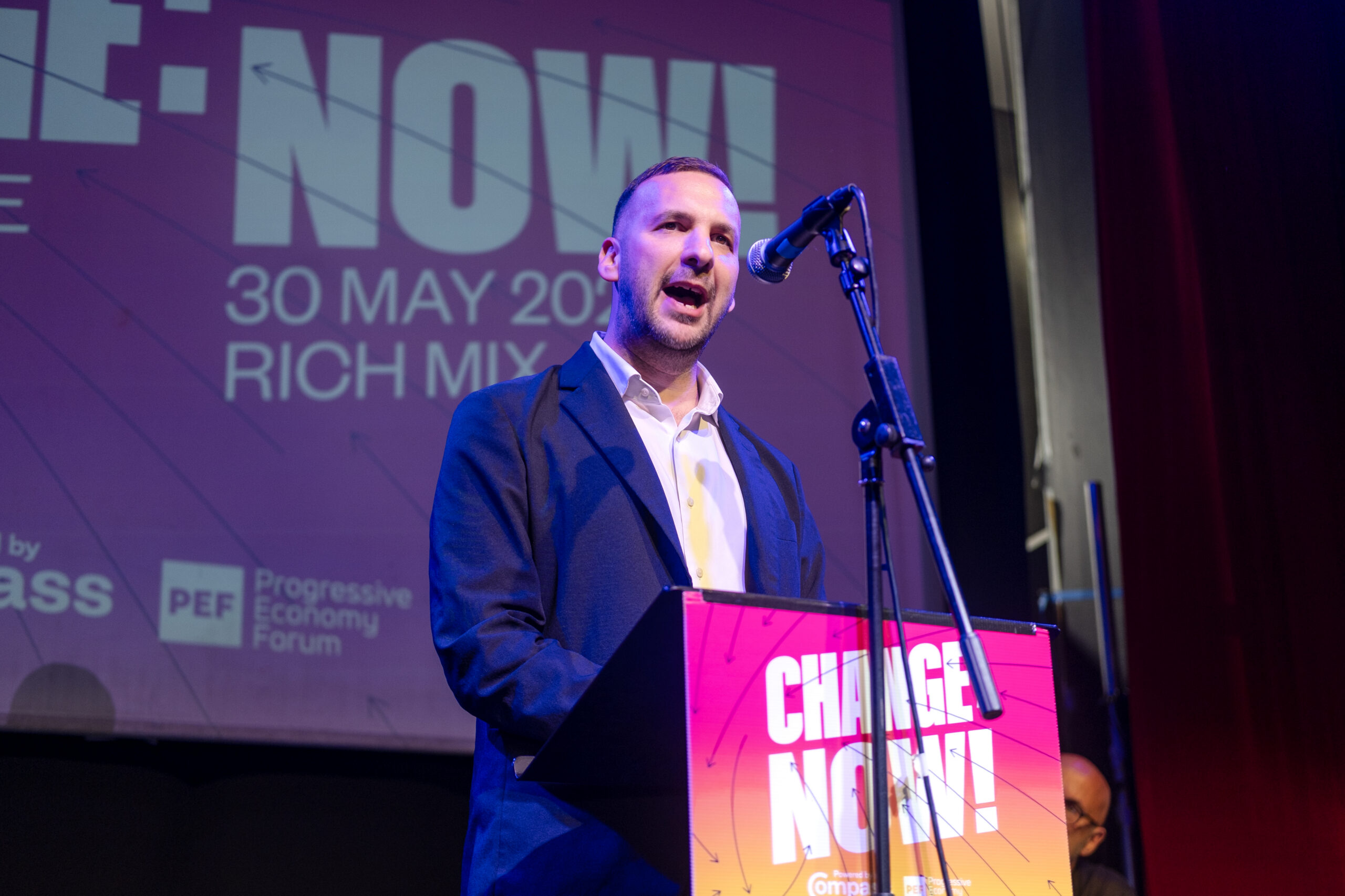
“[Many people are] just worried about food on the table… to them, the climate crisis feels abstract. That’s why we also need to recognise that at the heart of the climate crisis is an inequality crisis.”
He argued that building lasting change requires tackling these challenges together — creating an economy and a political system that can deliver both environmental sustainability and greater security, dignity and fairness for all.
Change:NOW! demonstrated that the challenges we face, from the climate crisis to rising economic insecurity, cannot be addressed by any single political party in isolation. These issues demand broad-based coalitions and sustained organising across movements and communities.
The task now is to turn the day’s ideas and energy into lasting action.